
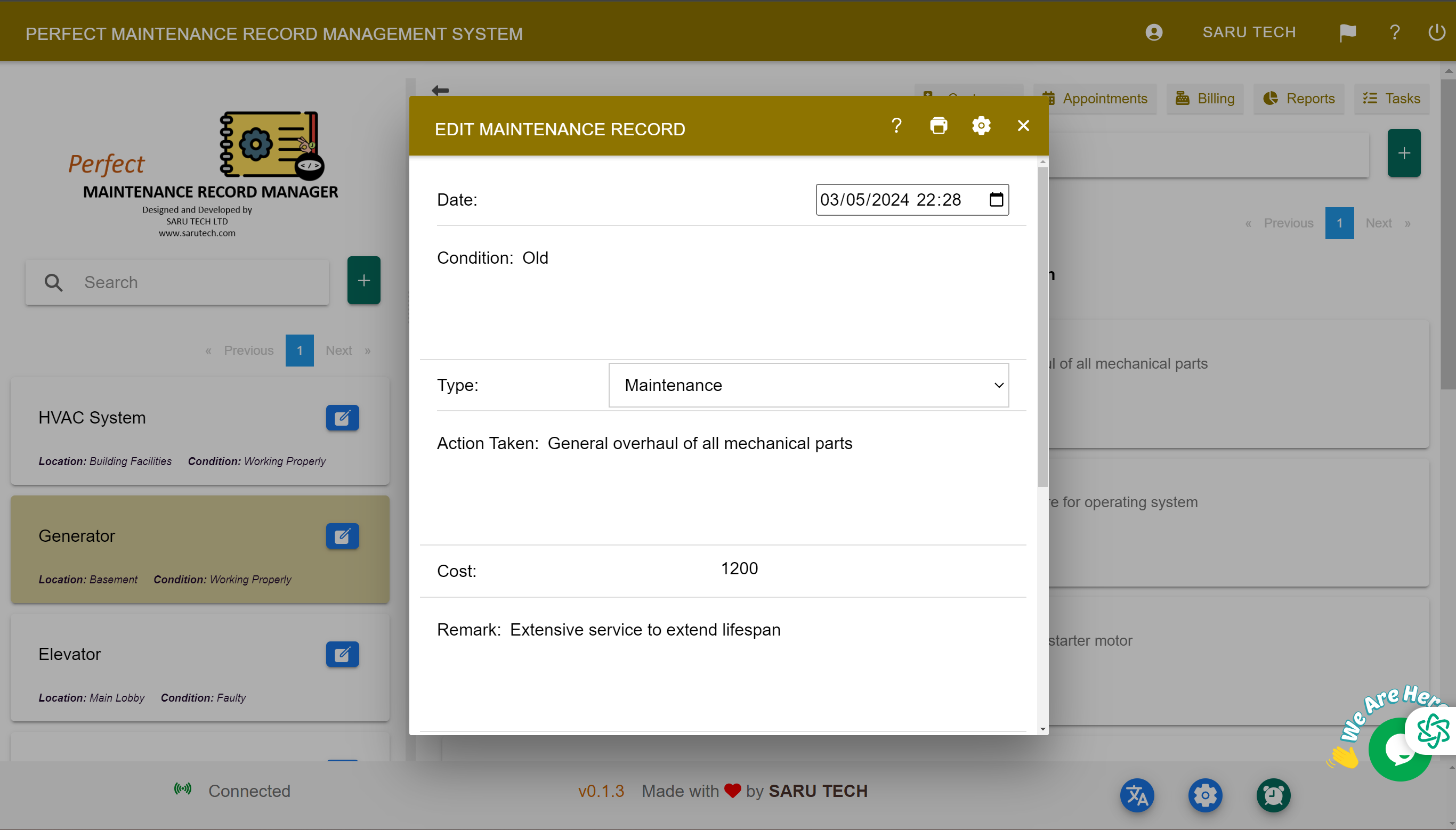
Register equipment at the correct facility and preserve identification, condition, warranty, documentation, and maintenance history.
An asset is any item your team inspects, services, or repairs. Examples include boilers, air conditioners, generators, lifts, vehicles, machinery, computers, fire equipment, and building systems.
Add an asset
- Open Assets and use the facility filter to confirm the correct location.
- Select Add Asset and enter a recognisable asset name.
- Choose the facility where the asset is installed or normally kept.
- Record available information such as status, condition, room or area, serial number, manufacturer, model, installation date, warranty, and parts details.
- Add a clear image of the asset and, where useful, its identification plate or serial number.
- Attach manuals, purchase receipts, certificates, warranties, inspection records, or other supporting documents.
- Add comments for additional notes and select Save.
Use the asset list
From the Maintenance page, open the Assets tab and filter by facility. Selecting an asset focuses the maintenance list on jobs related to that equipment. This provides a practical service history for diagnosis, warranty review, lifecycle planning, and replacement decisions.
Once saved, the asset becomes available when users create a reactive maintenance request or schedule preventive work. Connecting every job to the correct asset keeps quotations, invoices, images, files, comments, and costs associated with the right equipment.
Keep the record useful over time
- Update status and condition after inspections or major repairs.
- Replace outdated manuals and warranty documents with current versions.
- Record new serial, model, or installation information when equipment is replaced.
- Use comments for short observations and maintenance requests for work that must be tracked.